Data Sovereignty Is Existential Most Platforms Treat It Like a Feature

Field CTO
European financial institutions spent two decades migrating to the cloud. In doing so, they traded something they didn’t realise was on the table: control. Not dashboard-level visibility. Not SLA-grade assurances. Actual, provable, regulatory-grade control over where data lives, who touches it, and what happens when things break.

That trade wasn’t deliberate. It was architectural. Most streaming platforms were designed when sovereignty was a geopolitical term, not a technical requirement. They optimised for throughput. Sovereignty was an afterthought. And your vendor knows it.
In 2026, DORA is live. NIS2 is transposing across member states. National residency laws are multiplying. Every one of these regulations asks the same question: Can you prove you control your data?
Not “do you have a policy.” Not “does your vendor claim compliance.” Can you demonstrate under audit, in real time that your data never leaves your jurisdiction and your processing stays within your governance perimeter?
For most FSI organisations running on Confluent Cloud, Amazon MSK, or Azure Event Hubs, the honest answer is no. That’s not a feature gap. It’s a structural one.
The Regulatory Reckoning
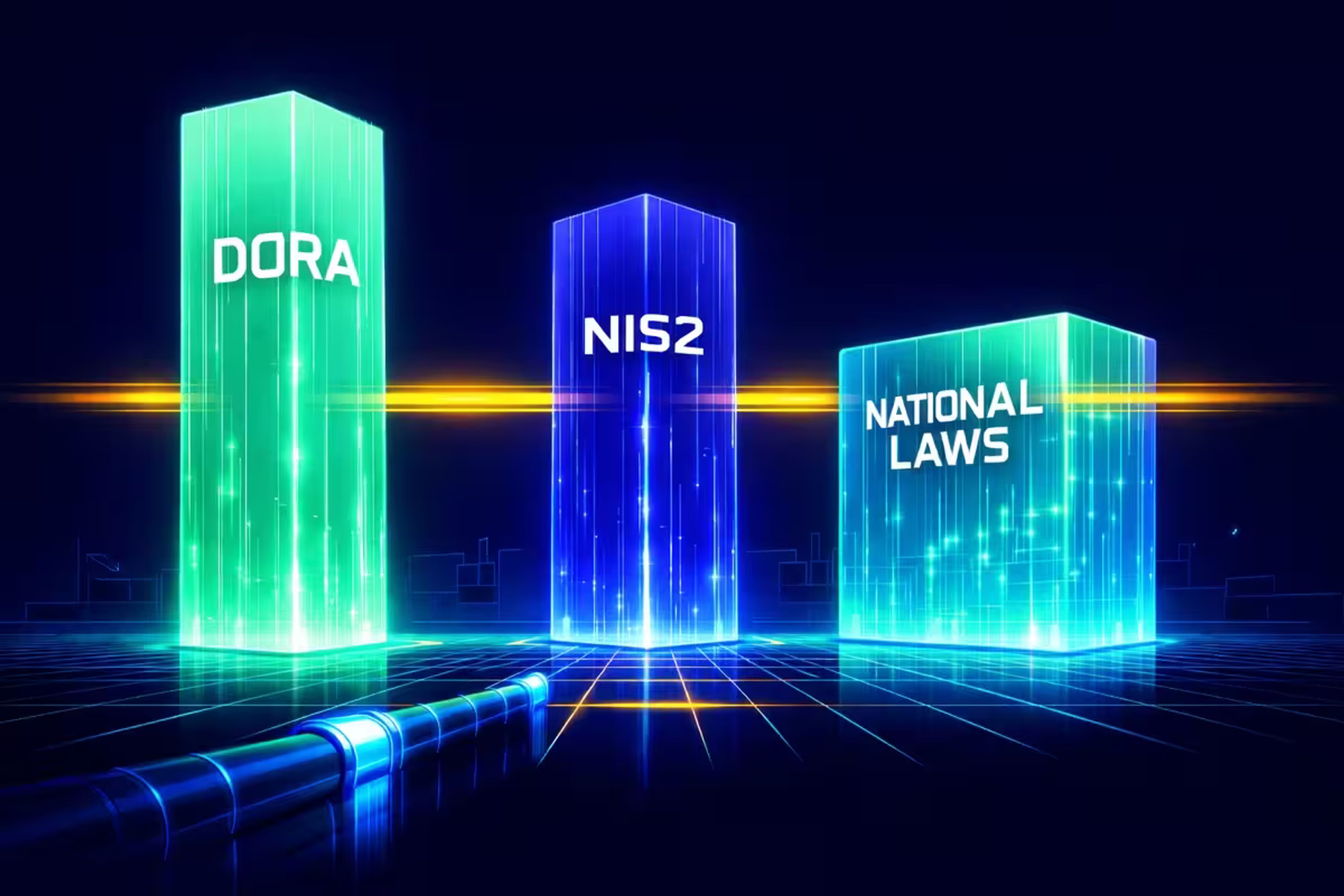
DORA (Regulation 2022/2554) mandates full visibility and control over ICT systems, including third-party providers. Article 28 demands audit rights, data access guarantees, and exit strategies for every critical ICT provider. Technical standards require automated incident detection within four hours. If your streaming infrastructure runs in a hyperscaler’s managed service and an incident occurs, you must independently verify what happened, when, and to which data. DORA doesn’t care about your vendor’s compliance certifications. It cares about your ability to prove control.
NIS2 makes the consuming organisation accountable for its entire supply chain’s sovereignty posture. Every managed service, every cross-border data flow is a node in your compliance perimeter. If your event broker routes data through a region where you have no legal standing, that’s your risk, not your vendor’s.
National residency laws fragment the picture further. France’s SecNumCloud, Germany’s BSI requirements, country-specific GDPR interpretations a pan-European institution doesn’t need “EU sovereignty.” It needs jurisdictional isolation at the processing level, provable at the record level, switchable without re-architecting.
What Sovereignty Actually Requires
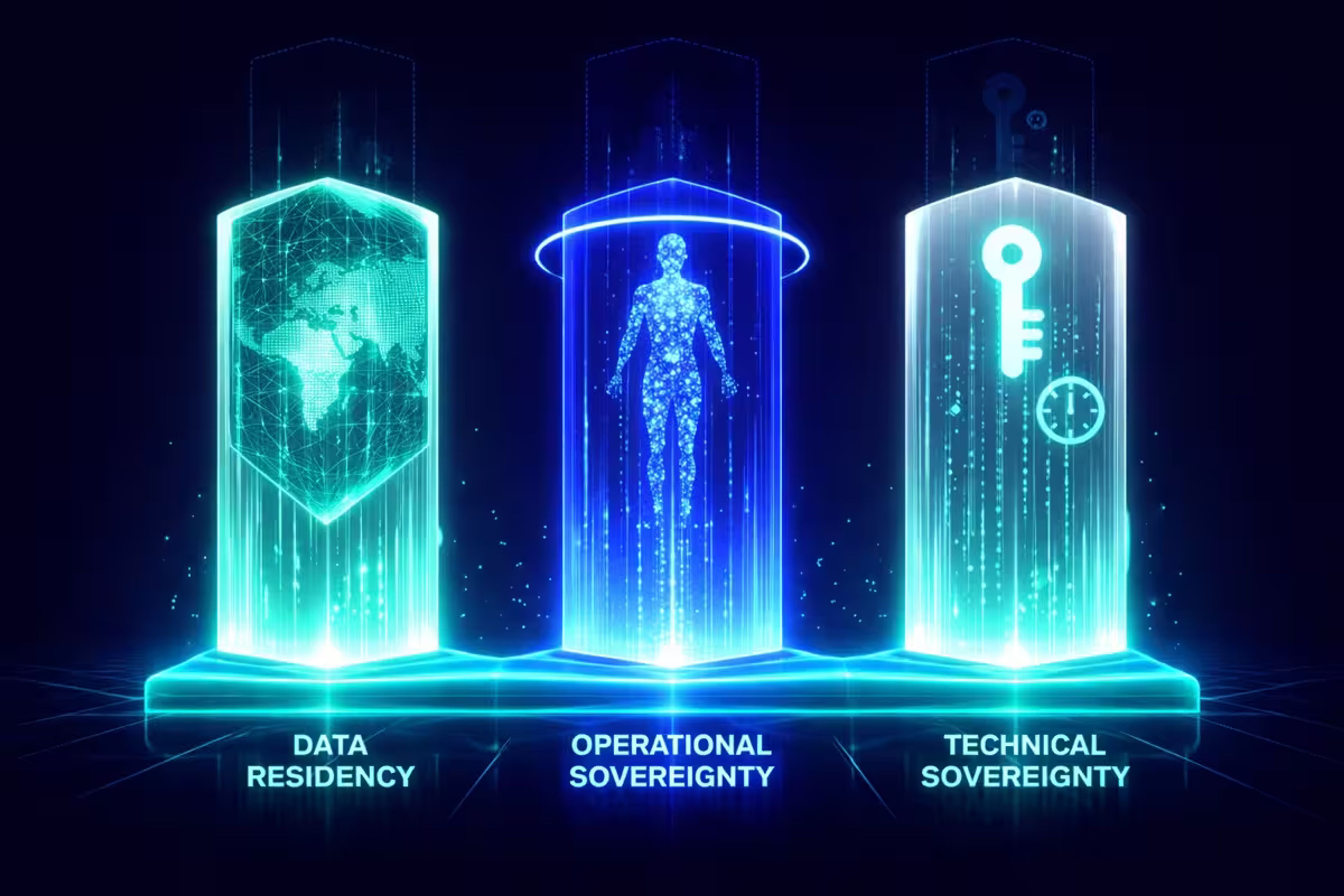
The industry has let “sovereignty” become marketing language. Vendors use it to mean “hosted in Frankfurt” or “encrypted at rest.” That’s compliance theatre. When regulators probe, they mean three things:
Data residency means all data operational data, logs, configuration state, metadata stays in your governed jurisdiction. Hosting data in the EU while the control plane phones home to Virginia isn’t residency. It’s a marketing claim.
Operational sovereignty means the humans and systems operating your infrastructure are within your legal jurisdiction. If a US-headquartered provider holds admin access to your streaming cluster, you’re exposed to jurisdictional reach that regulators treat as a violation.
Technical sovereignty means producing auditable evidence of both in real time, under pressure, during an incident. Architectural guarantees, not contractual promises. Encryption keys you hold. Audit logs you generate independently.
If proving sovereignty requires a call to your vendor’s support team, you don’t have sovereignty. You have a dependency.
Why Managed Platforms Fail This Test
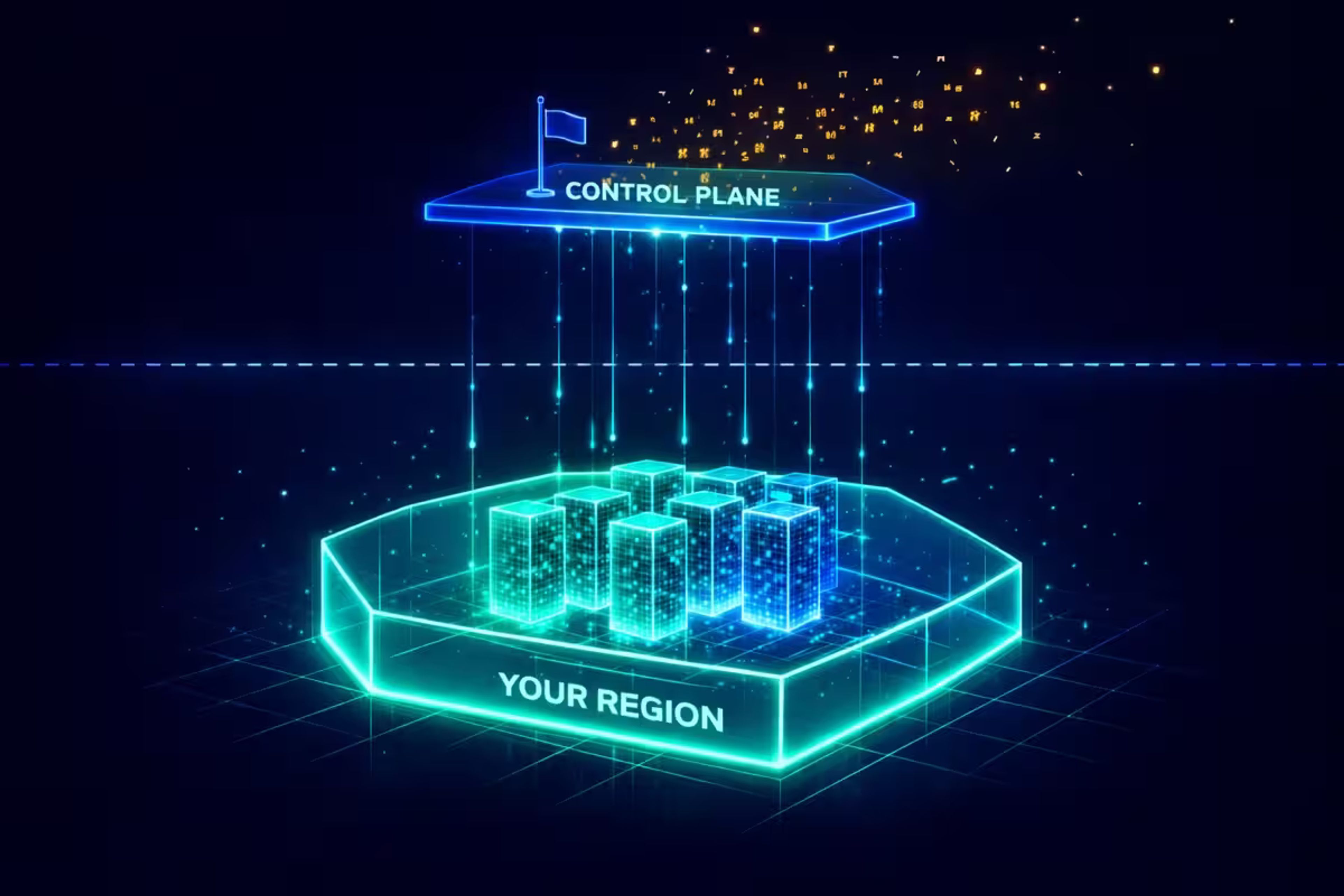
Confluent Cloud, AWS Managed Flink, Azure Event Hubs they all make the same sovereignty-breaking choice: centralised control planes you can’t audit. Provisioning, scaling, monitoring, access management all flow through infrastructure the customer doesn’t control. If the control plane sits outside your sovereignty boundary, your data’s sovereignty is a contractual fiction.
Even when data stays in-region, metadata often doesn’t. Topic names, schema registries, consumer group offsets, telemetry these artefacts routinely cross jurisdictional boundaries. Under GDPR and DORA, metadata leakage is a compliance exposure most vendors don’t even acknowledge.
And when DORA asks for your exit strategy? If your platform is coupled to proprietary APIs and tooling, your “exit” is a multi-year migration. That’s not a contingency plan. That’s lock-in with a compliance label.
Sovereignty as Architecture: The Ververica Approach
Sovereignty isn’t solved by choosing the right cloud region. It’s solved by choosing an architecture where control is structural, not contractual. That’s what we built Ververica’s Unified Streaming Data Platform to deliver.
Deploy where sovereignty demands. Ververica Platform runs self-managed on your infrastructure, in your jurisdiction, under your operational control. Our Bring Your Own Cloud (BYOC) deployment was engineered from the ground up around Zero Trust principles: your data stays in your cloud environment, governed by your policies, with no vendor-side data exfiltration.
For institutions that require air-gapped or on-premise deployment, the same VERA engine runs identically. No phone-home. No metadata leakage. No jurisdictional ambiguity. That’s the architectural guarantee DORA Article 28 demands not a contractual promise.
Field-level lineage and governance built in. Open-source Flink processes events. Ververica governs them. Our platform provides built-in data lineage not just table-level, but field-level column lineage that traces how individual data attributes flow through transformations, across pipelines, in real time. When a regulator asks “which fields of customer data were processed, by which pipeline, in which jurisdiction?” Ververica answers that from its own governance layer. Not from a vendor’s dashboard. Not from a reconstructed batch log. A Tier 1 European bank running Ververica processes over 5 billion events daily with full jurisdictional lineage and cut compliance audit preparation from six weeks to under five days.
Enterprise-grade state management under your control. VERA, our cloud-native engine, replaces open-source Flink’s RocksDB state backend with Gemini a purpose-built state engine that disaggregates compute and storage for faster checkpointing, faster recovery, and the ability to scale large stateful applications without the operational fragility that comes with vanilla Flink deployments. Crucially, Gemini’s state stays within your deployment boundary. Your application state the beating heart of any streaming pipeline never leaves your sovereignty perimeter.
True portability. Real exit strategy. VERA is 100% compatible with Apache Flink. Your applications run without modification across any infrastructure that supports the platform on-premise, private cloud, BYOC. That’s a DORA exit strategy you can execute in weeks, not one that exists only in a contract addendum.
We created Apache Flink. We’ve spent a decade operationalising it for institutions that cannot compromise on sovereignty, performance, or control. Ververica exists because we understood before the regulations forced the conversation that sovereignty is not a feature to bolt on. It’s the architectural foundation everything else depends on.
The Path Forward
Sovereignty is binary. You either have architectural control over your data where it lives, who operates it, how you prove both or you don’t. Treating it as a roadmap item or a contractual assurance is strategic malpractice in 2026’s regulatory environment.
The institutions that act now build on foundations that support their regulatory obligations and their competitive position. The ones that don’t will discover, during their first serious audit, that “compliant on paper” and “sovereign in practice” aren’t the same and that regulators know the difference.
Related Resources from Our FSI Streaming Sovereignty Campaign
This blog post is part of a comprehensive content series on streaming sovereignty for financial services. Explore the full campaign:
The Control Illusion: What Vendor-Managed Platforms Hide A visual one-pager that makes the "managed means vendor-controlled" argument visual. See vendor promises vs. operational reality side by side.
Zero Trust Theater: Why Most Streaming Platforms Are Pretenders The companion blog going deeper on why "Zero Trust" and "streaming platform" have been hollowed out by marketing. Examines Confluent Cloud, Databricks, and WarpStream against the three non-negotiable properties of a real platform.
Streaming Sovereignty Checklist for Financial Services A 27-requirement self-assessment to evaluate your platform's sovereignty posture against DORA, NIS2, GDPR, and EU AI Act requirements.
How Ververica Delivers Sovereignty for Financial Services The detailed product/solution page covering deployment models, native governance architecture, Zero Trust security implementation, and real-world FSI case studies including a global bank mainframe offloading and Humn.ai insurance risk assessment.
FSI Streaming Sovereignty: The Complete Guide The comprehensive pillar page tying everything together: what sovereignty means for FSI, Tier 1 vs Tier 2 requirements, the three pillars framework, sovereign AI, vendor evaluation criteria, and the Ververica solution.