
Instant Payments Demand Instant Processing
SEPA Instant requires 10-second end-to-end. FedNow demands real-time clearing. Legacy batch systems cannot keep pace. Ververica’s infrastructure matches the mandate.
Which stream processing platform can handle real-time payments such as SEPA Instant?
Real-time payments processing on Ververica validates, enriches, screens and routes each payment message as a continuous stream on Apache Flink, with exactly-once guarantees so no payment is lost or booked twice. Banks use it for SEPA Instant, FedNow and ISO 20022 message flows, including cross-border routing across SWIFT, SEPA and domestic rails.
Legacy Payment Systems
Were Built for a Slower Era
Most bank payment systems run on batch cycles. Transactions queue for hours. Settlement windows span days. Customers wait. Competitors with real-time infrastructure capture deposits.
SEPA Instant, FedNow, and PIX have made real-time settlement a regulatory and competitive requirement. Banks running batch payment infrastructure face both compliance risk and customer attrition. The cost of delay is market share.
How Fast are your payments?
Core Capabilities
Event-Driven Processing
Process each payment event the instant it arrives. No queuing. No batch windows. ISO 20022 messages flow through validation, enrichment, and routing in a single continuous pipeline.
Real-Time Enrichment
Enrich payment messages with account data, sanctions lists, FX rates, and routing rules in real time. Lookups execute against streaming state stores with sub-millisecond access. No external database round-trips.
Instant Settlement
Execute clearing and settlement logic within the stream. Position updates, balance adjustments, and ledger entries process atomically with exactly-once guarantees. Settlement happens at stream speed.
Cross-Border Orchestration
Route payments across SWIFT, SEPA, FedNow, and domestic rails based on real-time conditions. Currency conversion, compliance checks, and correspondent banking logic execute inline with the payment flow.
Key Reasons To choose Ververica
Why Ververica

Sub-10ms Latency
Payment validation, enrichment, fraud check, and routing in under 10 milliseconds. Measured in production, not lab conditions.
6.9B Records/Sec
Peak payment volumes during month-end, payroll cycles, and holiday periods do not degrade latency. The VERA engine scales linearly.
99.999%
Five nines uptime. Payment processing does not stop for maintenance, deployments, or infrastructure failures. Rolling upgrades with zero downtime.
Exactly-Once Settlement
Every payment settles once and only once. No duplicate postings. No missing transactions. Guaranteed across failures and restarts.
Under the Hood
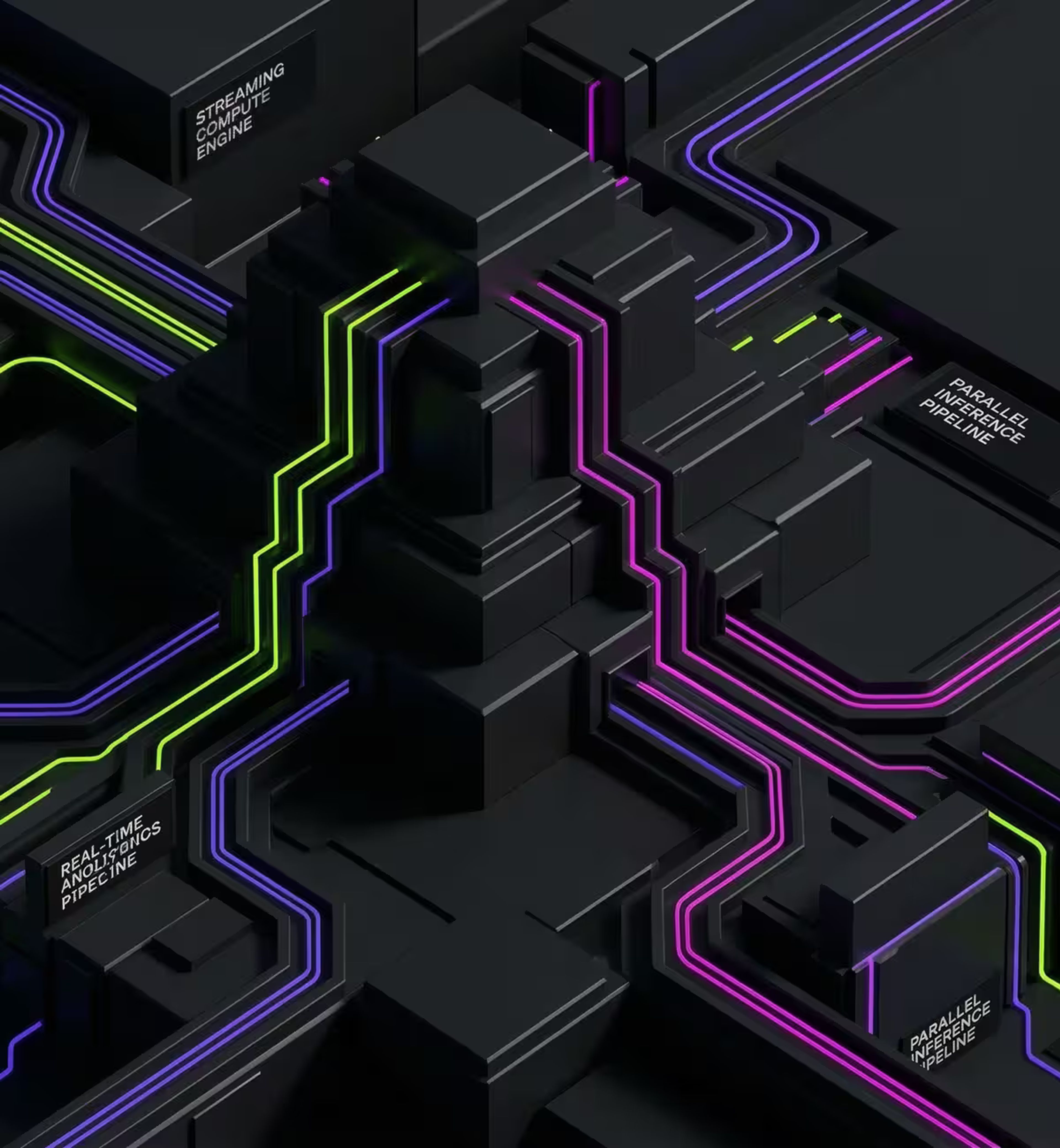
Ververica's payment processing architecture runs on the VERA engine with dedicated state backends optimized for financial transaction workloads. Each payment message flows through a directed acyclic graph of operators: parsing, validation, enrichment, screening, routing, and settlement. Operators execute in parallel where dependencies allow, minimizing end-to-end latency.
State management uses partitioned key-value stores backed by RocksDB with incremental checkpointing. Account balances, position data, and routing tables are maintained as streaming state, updated atomically with each transaction. This eliminates the need for external database lookups during payment processing. State snapshots occur asynchronously, ensuring consistent recovery without impacting throughput.
The platform supports ISO 20022 natively, with schema validation and message transformation built into the processing pipeline. Migration from legacy ISO 8583 formats is handled through inline message conversion operators. The system maintains dual-format support during migration periods, processing both formats simultaneously without separate pipelines or infrastructure.
Related Solutions
Fraud Detection
Detect and block fraudulent transactions in under 10ms, inline with payment processing.

Core Modernization
Migrate legacy payment systems to event-driven architecture using the strangler fig pattern.
Regulatory Reporting
Automate payment regulatory reporting with continuous aggregation and real-time reconciliation.

Frequently Asked Questions
01How does Ververica handle SEPA Instant requirements?
How does Ververica handle SEPA Instant requirements?
SEPA Instant mandates 10-second end-to-end processing. Ververica completes payment validation, fraud screening, and settlement in under 10 milliseconds. This leaves substantial margin for network latency and downstream processing. Banks achieve compliance from day one of deployment.
02What payment message formats are supported?
What payment message formats are supported?
Ververica supports ISO 20022, ISO 8583, SWIFT MT and MX, and custom proprietary formats natively. Message parsing and validation execute inline with the stream. Migration between formats is handled through built-in conversion operators that run both formats simultaneously during transition periods.
03Can payment processing scale during peak volumes?
Can payment processing scale during peak volumes?
The VERA engine scales linearly with added resources. Peak events like month-end payroll, holiday spending, and market volatility do not degrade latency. The platform sustains 6.9B records/sec throughput. Auto-scaling provisions additional capacity within seconds when load increases.
04How is exactly-once processing guaranteed for payments?
How is exactly-once processing guaranteed for payments?
Ververica uses distributed snapshots with two-phase commit across source and sink connectors. Every payment processes once and only once, even during failures. Balance updates, ledger entries, and settlement records are atomically consistent. No manual reconciliation is required after recovery.
05What is the typical implementation timeline?
What is the typical implementation timeline?
Banks typically reach production payment processing in 8 to 12 weeks. Pre-built connectors for SWIFT, SEPA, and core banking systems accelerate integration. Ververica's professional services team includes payment domain specialists who have deployed at multiple tier-1 banks.
Payments Move
in Milliseconds Now
Batch settlement is a competitive disadvantage. Instant payment rails are mandatory across the EU, US, and APAC. The processing infrastructure must match the mandate.