Real-Time Isn't A Feature You Bolt On. It's The Whole Solution

Head of Strategic Alliances
There's a special kind of pain in knowing exactly what went wrong, just slightly too late to do anything about it. I see it every day as the Head of Strategic Alliances at Ververica, and it's often not even a technology problem. The technology exists. It's the gap between what enterprises know they need and what actually ends up being built that’s the issue.
My colleagues at Noventiq wrote about such a problem in their recent blog: “Real-Time Fraud Detection and Streaming Intelligence for Financial Services on AWS”, and they nailed it. Consider the impact: card fraud losses hit $33.83 billion in 2023. Projections for the next decade run to ~$404 billion. Batch processing catches all of it, eventually, which is a bit like your bank ringing to say your card's been cloned and then adding "anyway, hope you enjoyed Sydney."
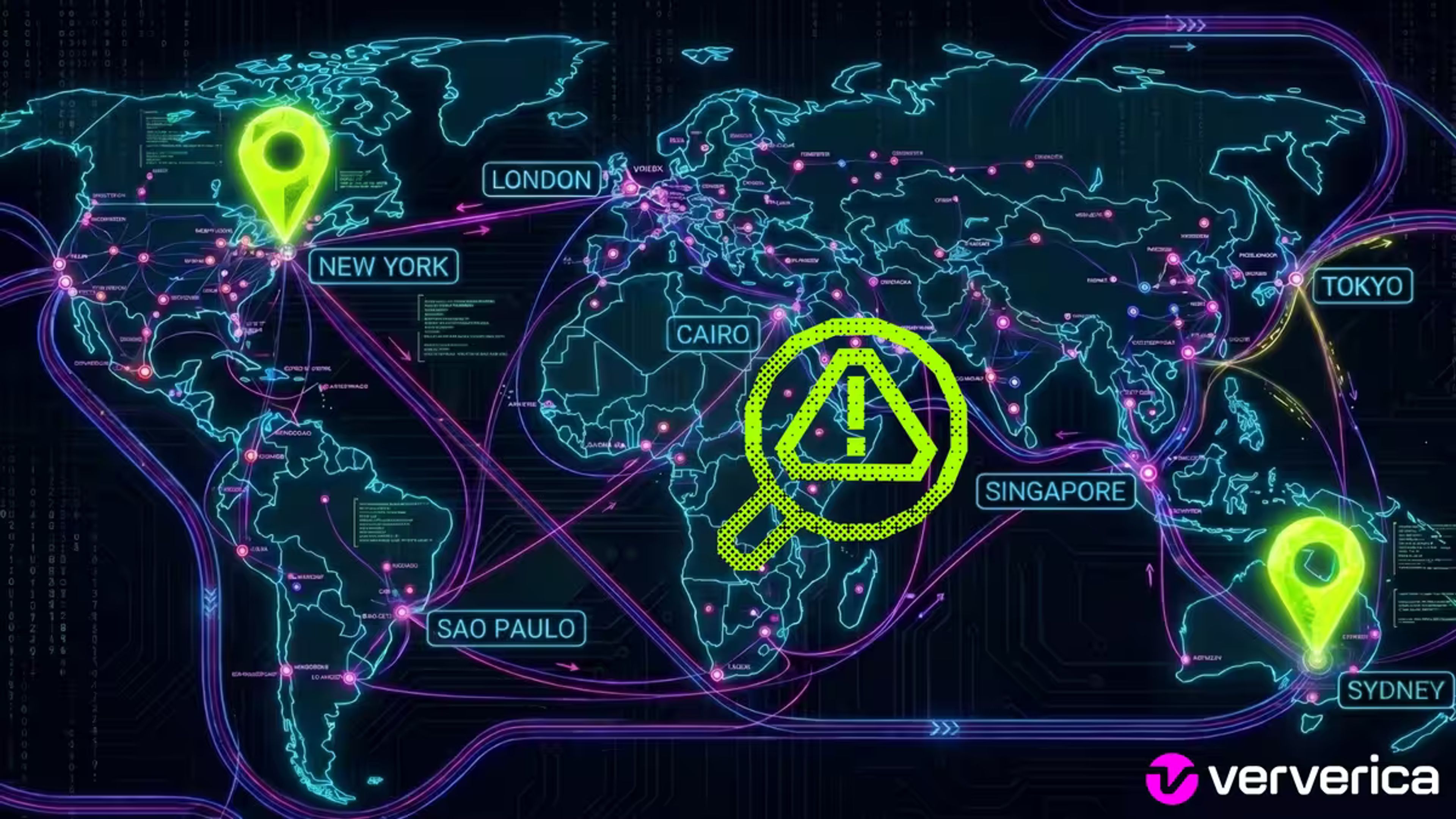
So the case for real-time makes itself. Everyone wants it. Everyone nods along in the meeting. Someone says "customer-centric," someone else writes it down, and then it dies in a steering committee like everything else that ever showed promise.
The interesting bit is what actually makes real-time work once it leaves the slide deck. Because that's where most streaming projects quietly die. No funeral, no lessons learned, just a Confluence page nobody opens again.
Reacting to one event as it lands is easy. Any queue does it. The hard part, the bit worth actual money, is holding state across millions of events and still making the right call in milliseconds.
Take fraud. One transaction on its own tells you nothing. It's the financial equivalent of judging someone by their dating profile, which, while technically is data and information, can also be mostly lies. What matters is the correlation of this transaction against the last fifty from that account, the device it came from, the pattern over the last ten minutes, and whether any of it looks normal for that customer. Some people genuinely do drop two grand on gym gear in January. That's not fraud. It's optimism, and it'll be refunded by March.
That's stateful stream processing, and it's genuinely hard at scale. Your state has to stay consistent. It has to survive a failure without dropping events or, worse, counting them twice, because "we charged you once, possibly" is not a phrase that ends well for anyone. And it has to stay fast exactly when volumes spike, which is precisely the moment your system decides it's had enough and would like to speak to its manager.
This is the problem Apache Flink® was built to solve, and it's why Ververica exists. As the original creators of Flink, we know it best, and so if it breaks, that's on us. No supplier to blame, no throat but our own to clear. With Ververica, you get exactly-once processing. Event-time handling, so late data doesn't wander in an hour later and quietly torch your results. A supercharged engine that handles state that scales into terabytes and stays queryable in real time, while maintaining 100% compatibility with open source Flink. All so when a bank stops a fraudulent payment before it clears, that's this stuff doing the work behind the scenes and getting exactly none of the credit. (Story of my life.)
Where Aws And Noventiq Come In
Flink is an engine, and a very good one at that. But an engine on its own just sits there being expensive and slightly smug. It needs somewhere to run, and someone who can get it into a regulated bank without setting off every alarm, sprinkler and compliance officer in the building. It needs to be part of a solution.
That's the partnership.
AWS brings the platform around it. MSK and Kinesis pull in events from core banking, payments and digital channels. SageMaker serves the risk models. Bedrock writes the investigative summaries and compliance narratives, a job so soul-destroying that handing it to a machine is arguably the most ethical thing on this list. S3, Redshift and Glue hold the reporting layer the regulators want to see. Ververica sits in the middle doing the stateful processing, the event detection, the enrichment and the windowed analytics.
Noventiq is the reason it actually ships. They’ve been an AWS Premier Partner since 2013, with 250-plus certifications, and real scars from doing governance and compliance work that would make most people quietly change careers. Handing a Tier-1 bank a streaming engine is one thing. Getting it through their security review, their data sovereignty rules and their change process is another sport entirely. That process moves at the speed of continental drift and has roughly the same sense of humour. Noventiq knows how to work with it without losing the will to live.
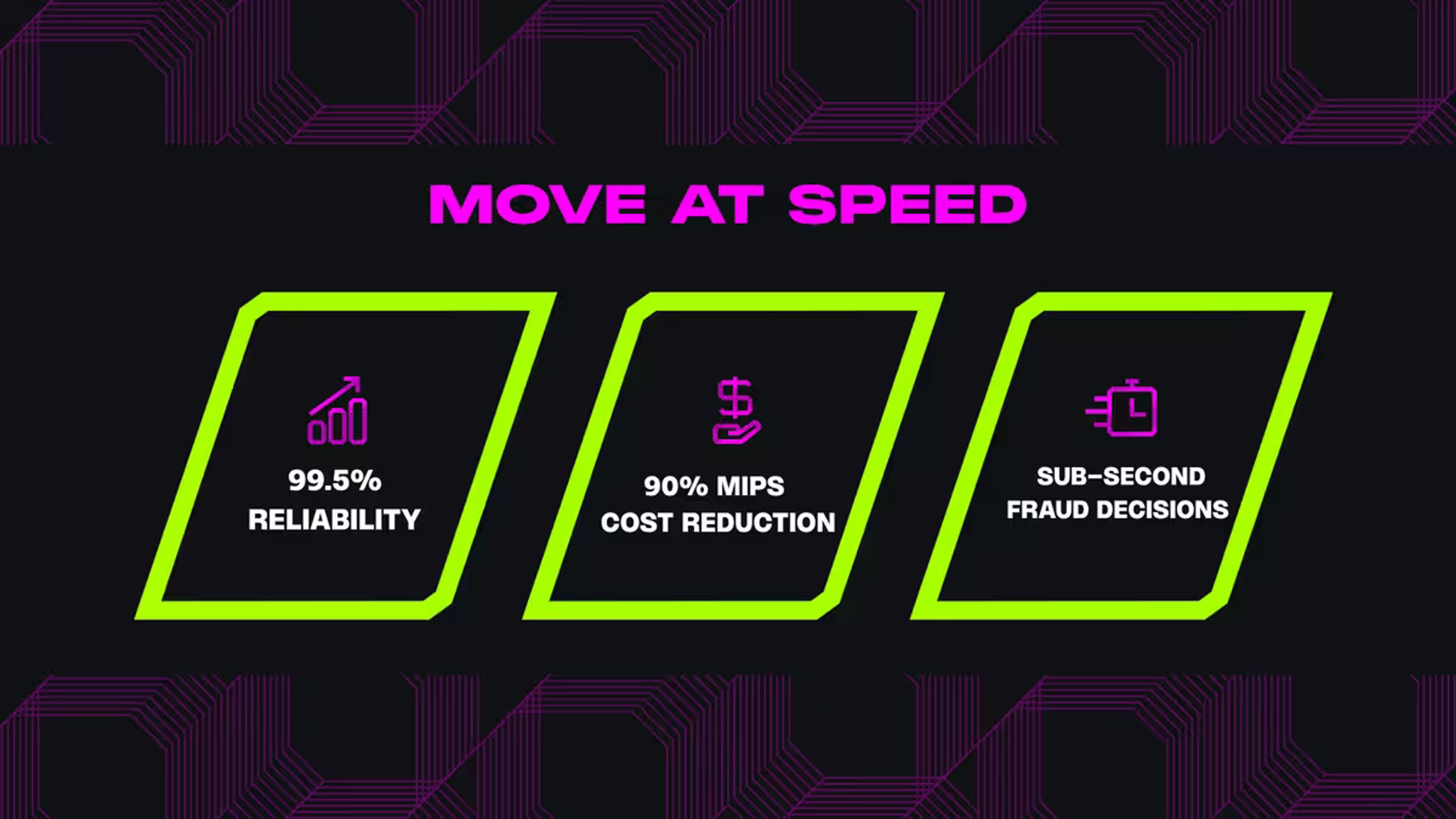
The numbers back it up. Sub-second fraud decisions at the 95th percentile. Mainframe MIPS costs down 80 to 90 percent when batch jobs move to streaming, the kind of saving that makes a CFO go misty-eyed and start using your first name. Reliability north of 99.5 percent.
Fraud Is The Start, Not The Finish
And once the streaming layer's in, it keeps paying you back, which puts it ahead of most things in banking.
The rolling behavioural profiles that catch fraud are the same ones that power Customer 360, personalization and churn prediction. The continuous processing that feeds your compliance reports is the same processing that lets you retire those ruinously expensive mainframe batch jobs and the small priesthood employed to keep them alive. You build the hard part once, then reuse it everywhere. Best return in the building, and it doesn't even take a bonus.
And you don't have to bet the farm on day one, mostly because someone in risk would have a stroke. Run it yourself on your own AWS setup with Ververica Platform self-managed option, both hands on the wheel. Or use Ververica Platform in the Bring Your Own Cloud deployment, where your sensitive data never leaves your environment but we still run the control plane. We meet you where you are, no judgement, even if where you are is "held together by a batch job written by a man who retired in 2011."
Let's Talk
If you're fighting fraud, drowning in compliance, or watching a mainframe bill climb every quarter like it's got something to prove, I'd like to hear about it. We start with a use-case workshop, pin down one real scenario, prove it in a pilot with KPIs you can actually measure, then scale from there.
Find me on LinkedIn or reach out to the team. The joint solution is also on the AWS Marketplace.
Batch tells you what you lost. Streaming lets you stop it. That's the whole point.
More Resources
- Built for This. Ververica in Action. Real features. Real use cases. Real demos. Every video in this playlist shows Ververica Platform doing exactly what it's built to do, demonstrated in precisely the way real users actually use it.
- Running fraud detection on batch jobs and wondering what you're missing?
- Read this:https://www.ververica.com/blog/real-t…
- Evaluating stream processing for financial services?
- Start here: https://www.ververica.com/banking/fra...
- Global Bank Achieves 90% Cost Savings with Mainframe Offloading!
- Outrun Fraudsters with Agentic AI and Ververica
Contact us https://www.ververica.com/contact